
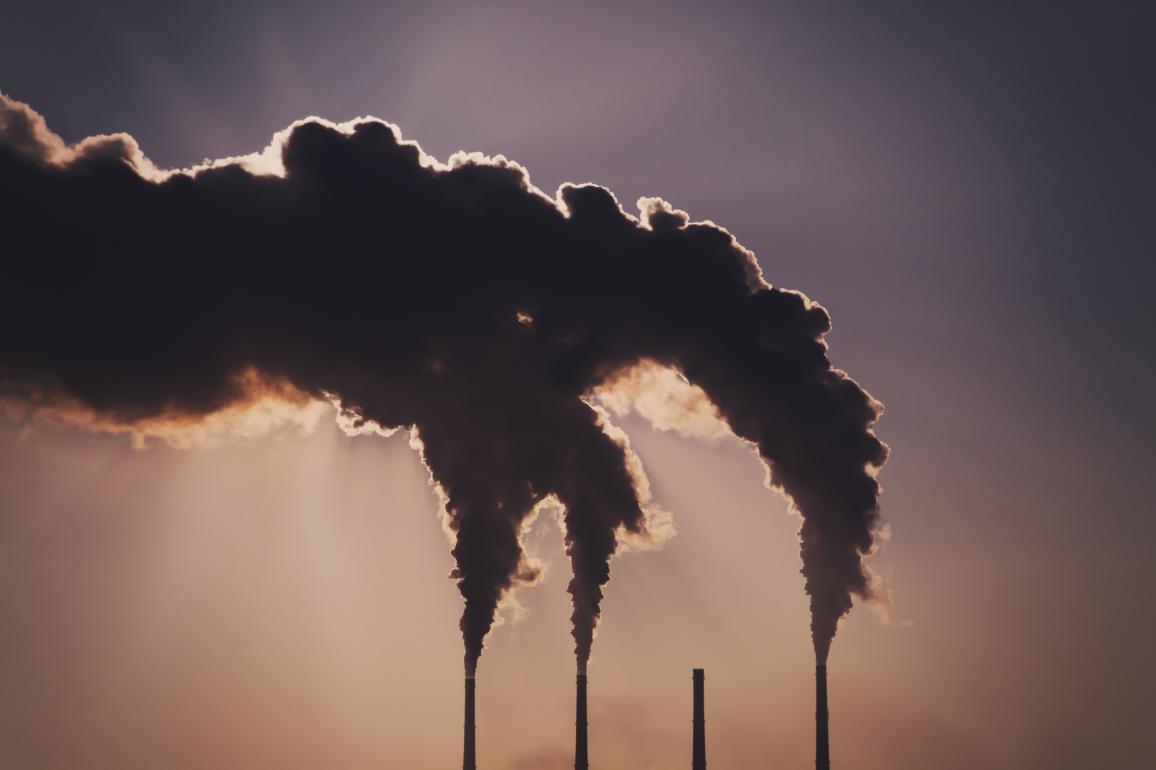
 Read what measures the European Union is taking to meet targets to reduce carbon emissions as part of the Fit for 55 in 2030 package.
EU climate change goals and the European Green Deal
To tackle climate change, the European Parliament adopted the European Climate Law, which raises the EU’s target of reducing net greenhouse gas emissions at least 55% by 2030 (from the current 40%) and makes climate neutrality by 2050 legally binding.
The Climate Law is part of the European Green Deal, the EU’s roadmap towards climate neutrality. To reach its climate goal, the European Union has come up with an ambitious package of legislation known as Fit for 55 in 2030. It comprises several interlinked revised laws and new proposed laws on climate and energy.
Check out facts and figures about climate change in Europe
An Emissions Trading System for industry
The EU’s Emissions Trading System (ETS) aims to reduce the industry’s carbon emissions by obliging companies to hold a permit for each tonne of CO2 they emit. Companies have to buy them through auctions. There are some incentives to boost innovation in the sector.
The European Emissions Trading System is the world’s first major carbon market and remains the largest one. It regulates about 40% of total EU greenhouse gas emissions and covers about 10,000 power stations and manufacturing plants in the EU. To align it with the emission reduction targets of the European Green Deal, Parliament approved an update of the scheme in April 2023. Reforms include the cutting of emissions in sectors covered by the Emissions Trading System to 62% by 2030, from 2005 levels.
Find out more about how the EU’s Emissions Trading System works and how it is currently being reformed.
Cutting emissions from transport in Europe
Emissions from planes and ships
Civil aviation accounts for 13.4% of total CO2 emissions from EU transport. In April 2023, Parliament backed a revision of the Emissions Trading System for aviation to apply to all flights departing from the European Economic Area – which is made up of the EU plus Iceland, Liechtenstein and Norway. Those departing and landing outside the area are currently covered by the voluntary Carbon Offsetting and Reduction Scheme for International Aviation (Corsia).
The EU also wants to phase out free allocations for aviation by 2026 and promote the use of sustainable aviation fuels.
Parliament and the Council agreed that used cooking oil, synthetic fuel or even hydrogen should gradually become the norm for aviation fuel. They want suppliers to start delivering sustainable fuel from 2025, reaching 70% of all aviation fuel in EU airports by 2050.
Maritime transport will also be included in the Emissions Trading System. MEPs want the maritime sector to cut greenhouse gas emissions from ships by 2% as of 2025, 14.5% as of 2035 and 80% as of 2050 compared to 2020 levels. The cuts should apply to ships over a gross tonnage of 5,000, which account for 90% of CO2 emissions.
Read more about EU measures to cut emissions from planes and ships.
Road emissions from cars
Cars and vans produce 15% of the EU’s CO2 emissions. Parliament backed the Commission proposal of zero CO2 emissions for cars and vans by 2035 with intermediate emissions reduction targets for 2030 of 55% for cars and 50% for vans.
Learn more about the new CO2 targets for cars
To reach these targets, all new cars that come on the EU market as of 2035 should be zero CO2 emissions. These rules don’t affect existing cars.
Read more about the EU ban on the sale of new petrol and diesel cars
The switch to zero-emission vehicles must go hand in hand with a comprehensive infrastructure for sustainable fuels. MEPs want electric charging areas for cars at least once every 60 kilometres along main EU roads by 2026 and hydrogen refuelling stations every 100 kilometres by 2028.
Read more about how the EU wants to increase the use of sustainable fuels.
A separate emissions trading system will be created for buildings and road transport as of 2027.
Reducing emissions from the energy sector
Fuel combustion is responsible for more than three quarters of EU greenhouse gas emissions. Decreasing energy consumption and developing cleaner energy sources are key to reaching the EU’s climate goals and reducing its dependency on imports from non-EU countries.
Consuming less energy
To curb energy consumption, in September 2022 Parliament backed the goals of a reduction of at least 40% in final energy consumption by 2030 (such as electricity consumption by households) and 42.5% in primary energy consumption (total energy demand within a country, such as fuel burnt to produce electricity).
In March 2023, Parliament and Council negotiators agreed on new rules to boost energy savings.EU countries should collectively ensure a reduction in energy consumption of at least 11.7% at EU level by 2030 (compared to 2020 projections of energy consumption in 2030). There should also be annual energy savings of 1.5% (on average) by countries until the end of 2025. Parliament is expected to endorse this agreement by this summer before the Council approves it. The legislation can then enter into force.
Today the heating and cooling of buildings accounts for 40% of all the energy consumed in the EU. Parliament is working on rules for the energy performance of buildings with the aim of reaching zero-emission building stock by 2050. Rules include:
- renovation strategies
- the requirement for all new buildings in the EU to produce zero-emissions from 2030
- the installation of solar panels on new buildings
Read more about the EU’s plan to reduce its energy consumption
Increasing renewable energy
Developing clean energy sources as alternatives to fossil fuels will also help the EU to reduce emissions. Currently, more than 20% of energy consumed in the EU comes from renewable sources.
In December 2022, MEPs demanded that permits for renewable energy power plants are issued faster, including for solar panels and windmills.
MEPs are looking into boosting renewable hydrogen and offshore renewable sources beyond wind, such as wave power. EU funding for natural gas infrastructure projects is being phased out and the money redirected to hydrogen and offshore renewable energy infrastructures.
In March 2023, Parliament and Council reached a deal to boost the deployment of renewable energy, in line with the Green Deal and efforts to cut dependency on Russian energy. They agreed to raise the share of renewables in the EU’s final energy consumption to 42.5% by 2030, whilst EU countries should aim for 45%.
Find out more on how the EU is boosting renewable energy
Carbon pricing on imported goods
A carbon border adjustment mechanism would encourage companies in and outside the EU to decarbonise, by placing a carbon price on the imports of certain goods if they come from countries with less ambitious climate legislation. It is intended to avoid carbon leakage, which is when industries move production to countries with less strict greenhouse gas emissions rules.
As part of the Fit for 55 package, the EU will create a Carbon Border Adjustment Mechanism applying a carbon levy on imports of certain goods from outside the EU. It will cover goods from energy-intensive industries such as iron, steel, cement, aluminium, fertilisers and hydrogen.
Importers will have to pay any difference between the carbon price paid in the country of production and the price of carbon allowances under the EU’s Emissions Trading System.
The Carbon Border Adjustment will run from 2026 until 2034. It will be phased out as fast as the free allowances in the EU Emissions Trading System. Parliament adopted the rules in April 2023.
Read more on preventing carbon leakage
Tackling carbon emissions from other sectors
Sectors not covered by the current Emissions Trading System – such as transport, agriculture, buildings and waste management – still account for about 60% of the EU’s overall emissions. The Commission proposed emissions from these sectors should be cut 40% by 2030 compared to 2005.
This will be done through agreed national emission targets in the effort sharing regulation. The national emission targets are calculated based on countries’ gross domestic product per capita. Lower-income EU countries will be provided with support.
In March 2023, the Parliament voted in favour of raising the bar for greenhouse gas reduction by 2030 from 30% to 40% compared to 2005 levels.
Read more on the emissions reduction targets for each EU country
Using forests to capture emissions
Forests are natural carbon sinks, meaning they capture more carbon from the atmosphere than they release. EU forests absorb the equivalent of nearly 7% of total EU greenhouse gas emissions each year. The EU wants to use this power to fight climate change.
In March 2023, Parliament and Council approved new rules governing the land use, land use change and forestry sector, increasing EU carbon sinks 15% by 2030.
Read more on how the EU wants to develop carbon sinks
Deforestation and forest degradation have an impact on the EU’s environmental objectives such as combating climate change and biodiversity loss, but also on human rights, peace and security. That is why the EU strives to combat global forest loss.
In April 2023, Parliament approved new rules obliging companies to verify that products sold on the European market have not contributed to deforestation or forest degradation anywhere in the world.
Read more on the causes of deforestation and how the EU is tackling it
Reducing greenhouse gases beyond CO2
To mitigate global warming, the EU is also making efforts to regulate other greenhouse gases heating up our planet, such as methane, fluorinated gases and ozone-depleting substances. Although they are present in smaller volumes than CO2 in the atmosphere, they can have a significant warming effect and are covered by the Paris Agreement.
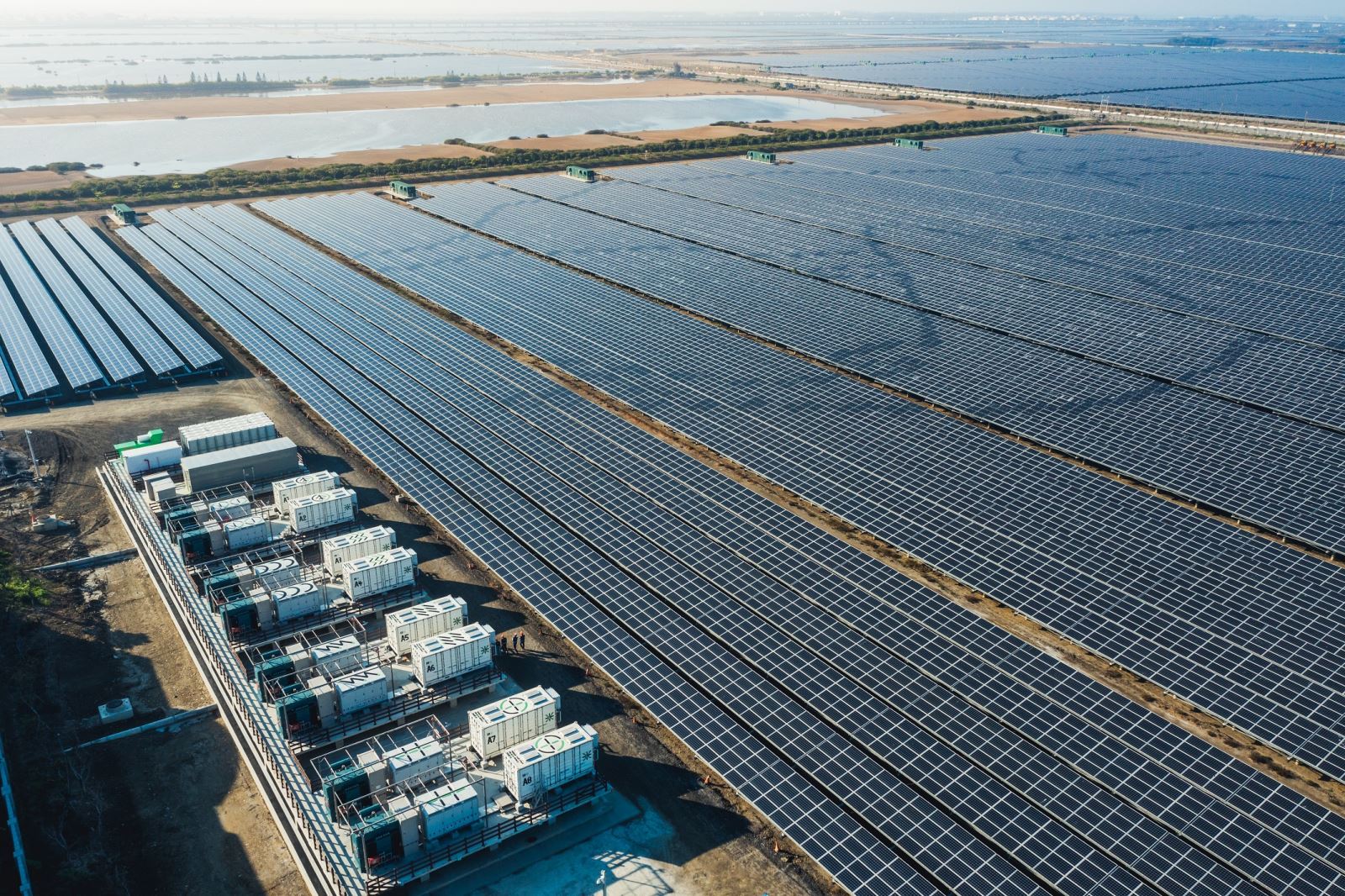 Taiwan’s first solar power plant with energy storage is born! Taipower previously installed energy storage systems at the Kinmen Hsiahsing Power Plant and the Lanyu Power Plant to create an outlying island smart grid, and now it is introducing green energy for the first time. Taipower’s Tainan Salt Field Solar PV Farm, which opened in 2020, is a collaboration with well-known new energy enterprise United Renewable Energy. Established as the first “solar power storage system”, the storage system, which officially opened today (January 6), integrates green energy and boasts a capacity of 20 MW (megawatts), making it the largest storage system in Taiwan. According to Taipower, the energy storage system features fast charging and discharging, which assists in the stable regulation of solar power generation into the grid, and can be used in combination with existing units to enhance the stability and flexibility of the power system, providing stable power immediately in case of unexpected power events.
This morning, Taipower held the opening ceremony for the Tainan Salt Field Solar Power Storage System. Tainan City Vice Mayor Yeh Tse-Shan, Taipower President Wang Yao-Ting, Energy and Storage Committee Chairman Hu Hui-Sen, and United Renewable Energy CEO Pan Wen-Hui all witnessed the official opening of the largest energy storage system in Taiwan.
According to Taipower, in 2020, it installed 480,000 photovoltaic panels on 214 hectares of abandoned salt flats in Tainan’s Jiangjun and Cigu districts to build the Tainan Salt Field Solar PV Farm; it had a capacity of 150MW (megawatts), which was the largest in Taiwan at the time. The Tainan Salt Field Solar PV Farm can generate an average of 200 million kWh of electricity per year, which is equivalent to the annual electricity consumption of nearly 50,000 households, and brings over 100,000 metric tons of carbon reduction benefits per year, while maintaining the site’s existing detention basin function. With the continuous development of green energy in recent years, in order to maximize the benefits of green energy, Taipower has built its first “solar power storage system” in conjunction with the Tainan Salt Field Solar PV Farm.
Taipower pointed out that it cooperated with a well-known new energy company, United Renewable Energy, to build a 20 MW/20 MWh (megawatt-hour) energy storage system at the Tainan Salt Field Solar PV Farm, with eight 20-foot storage containers built by Saft, a century-old French battery manufacturer that provided battery services for Boeing airliners in the United States, using more than 1,000 lithium battery modules, and adopting transformers from Shihlin Electric, a major domestic heavy electric product manufacturer as well as equipping power regulation systems. The total electricity storage capacity reaches 20,000 kWh, which is equivalent to the power consumption of 40,000 households for one hour. After its official launch today, it will not only be the first solar power storage system, but also the largest energy storage system in Taiwan.
According to Taipower, the energy storage system’s fast charging and discharging characteristics can help integrate solar power into the grid, reduce system fluctuations, maintain grid stability, and even store the daytime peak generated solar power for use during nighttime peak hours or in case of power emergencies. A response speed up to 1,000 times faster than conventional generating units enables it to provide immediate stable power and creates a buffer time for repair and restorations.
Taipower indicated that the combination of green energy and energy storage balances environmental sustainability with the need for a stable power supply; it has become an international trend in energy use and echoes the government’s 2025 target for energy storage systems. In addition to building the first solar power storage system and the largest energy storage system at Tainan Salt Field Solar PV Farm, Taipower will continue to build its own systems and energy ancillary service trading models to achieve the target of 1000 MW.
Spokesperson: Wu Chin-Chung, Chief Engineer
Telephone: (02) 2366-6271 / 0910-192-766
Email: u850899@taipower.com.tw
Contact Person: Tsai Ying-Sheng, Director, Renewable Energy Department
Telephone: (02) 2366-8650 / 0988-980-032
Email: u746723@taipower.com.tw
https://www.moea.gov.tw/Mns/english/news/News.aspx?kind=6&menu_id=176&news_id=108228